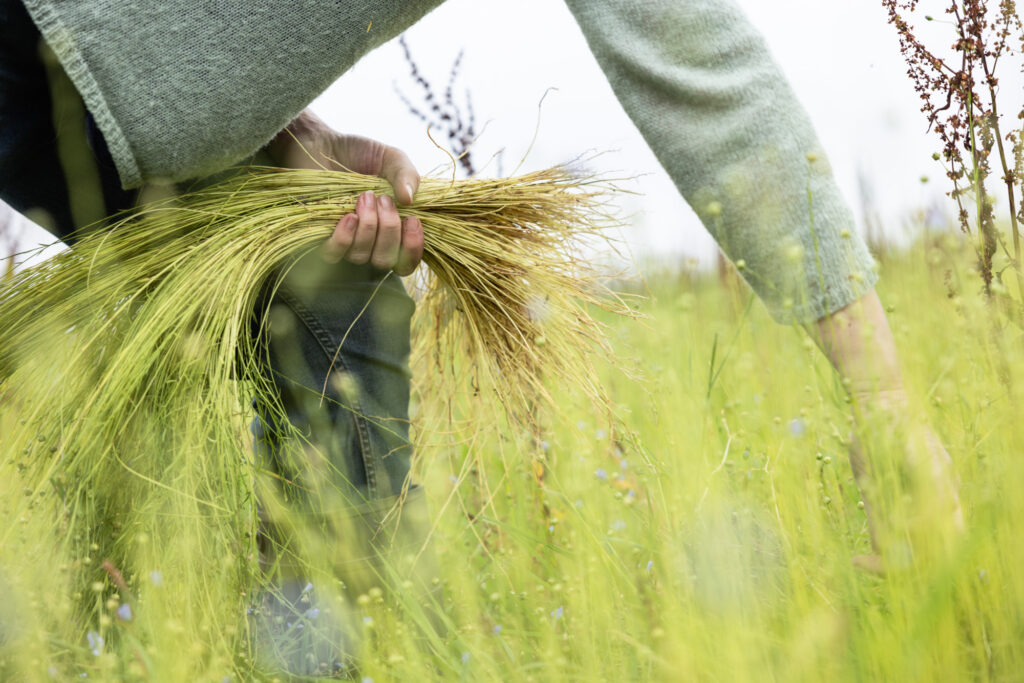
How restoring an old machinery line is really about saving a critically endangered craft
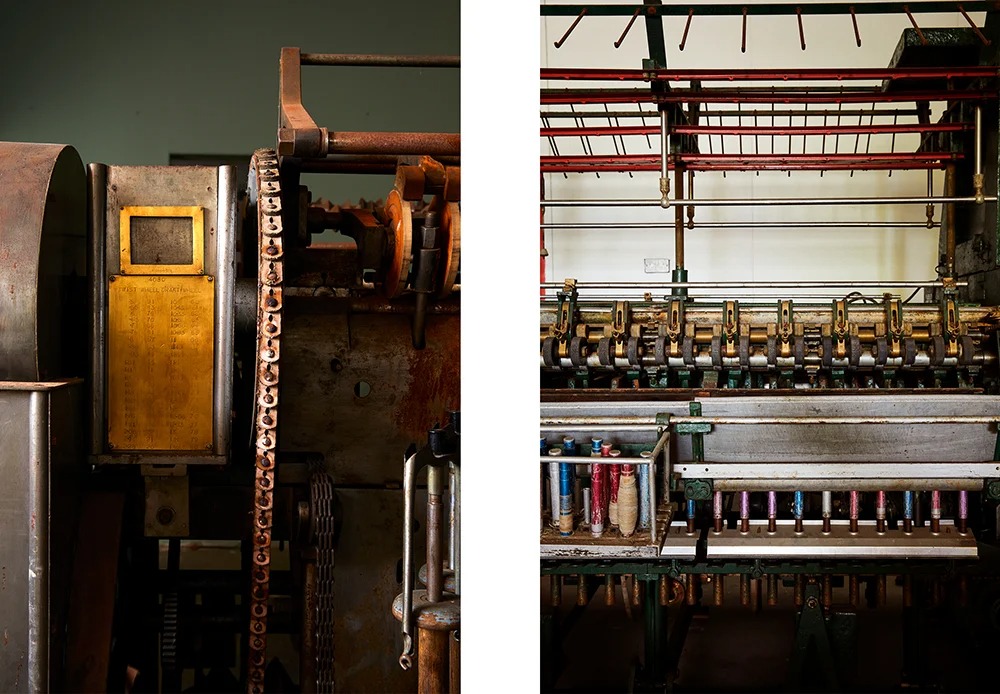
If you walked into the sheds at Mallon Farm and Hillmount, you might see what looks like a collection of heavy, silent, rusting iron. What you would actually be looking at is something rarer: an almost-complete sequence of machines that shows how flax becomes linen – carrying a flax plant all the way from the field to a spool of finished yarn.
That sequence has not existed as a working unit in Northern Ireland for decades. Restoring it is the ambition at the heart of this project, and the reason we’re seeking the funding and support to make it possible.
A Craft on the Red List
Bast-fibre processing, the craft of turning raw flax into linen yarn, is on the Heritage Crafts Association’s Red List of Endangered Crafts. This is from the process of scutching flax, to the spinning of linen. In plain terms, it is officially critically endangered in the United Kingdom. The reason is simple and urgent.
The knowledge of how to “set hackle pins, manage drafting ratios, recognise fibre readiness by touch and sound – is held by a vanishing small number of people. A few years from now, it may not be.”
Zoe Gilbertson
The heritage at risk is not only the objects; it is the living knowledge of how to use them. This includes the smell, the sound, and the feel of the fibre at each stage that no manual can fully capture.
Nine machines, One journey

The collection covers the whole journey. A scutching turbine breaks the woody core of the dried stem and beats the fragments away to release the long “line” fibre. Hecklers draw that fibre through rows of steel pins, coarse then fine, combing out the short strands and aligning the long ones into lustrous bundles. Then come the machines of the spinning line: a spreader, a first-run machine, a doubler, a roving frame, a wet ring spinning frame. Each of these is refining the fibre a stage further, until a hank winder gathers the finished yarn. Alongside them sits a flax puller, for the harvest itself.
Take any one machine on its own and it is an interesting artefact. Put them in sequence and something else happens: you get a complete supply chain, in miniature, that can actually run.
Charlie Mallon has already proved it can be done. His 1940s Mackie’s scutching turbine took four years of patient work, at his own expense, to bring back to life. It now breaks dried flax straw into the long golden fibre from which linen thread is spun — and other growers can bring their flax to Mallon Farm to have it scutched.
Made in Linenopolis
There is a nice symmetry to these machines. During its Linenopolis century, Belfast was not only the largest linen producer in the world, but it also built the machinery the whole industry ran on. The names on the maker’s plates in this collection weren’t provincial workshops; they were world leaders in textile engineering. The machines came home, in a sense, to the region that designed them.
Several are now deteriorating in place, and some are approaching the point where restoration becomes impossible. Once they are gone, they cannot be replaced.
Restoration as method, not just rescue
This is where the project aims to become more than a rescue mission. Around each machine, we hope to build a structured heritage-skills programme: twenty to thirty volunteers training across dozens of hands-on sessions, learning conservation and engineering skills that are useful far beyond flax. For each machine restored, we would produce a conservation dossier, with everything going into a freely accessible, openly licensed digital archive. Three online courses would carry the knowledge of flax farming, fibre processing and regenerative textile production to audiences well beyond Northern Ireland.
Crucially, the approach is to restore, rather than to replace. Parts would be machined to fit the existing structures; the skills taught would be those of maintenance and care. It is the lowest-carbon way to do industrial heritage — and it keeps the machines authentic. Charlie’s scutching turbine, restored over four years at his own expense, is proof the method works; the programme would extend it across the whole collection.
The whole point of a chain
Why go to all this trouble to complete the sequence, rather than simply conserve a few showpiece machines behind glass? Because a chain is only worth anything when it’s whole.
As Robert Martin of the Linen Biennale says, “a living, operating mill is a creative resource of a different order from a museum display.” A machine you can watch working — that you can hear, smell and touch — teaches something a static exhibit never can. A chain that runs end to end proves the thing that matters most: that flax grown a few miles away really can become linen yarn, here, on these islands, again.
Field to fabric. One machine, one skill, one person at a time.
The Linen Workers Restoration Project aims to restore this collection to working order across two sites, subject to the funding we’re now seeking. Follow the progress, or come and get your hands dirty.
The Linen Workers Restoration Project is subject to funding. This post describes what we hope to do, not a confirmed programme.