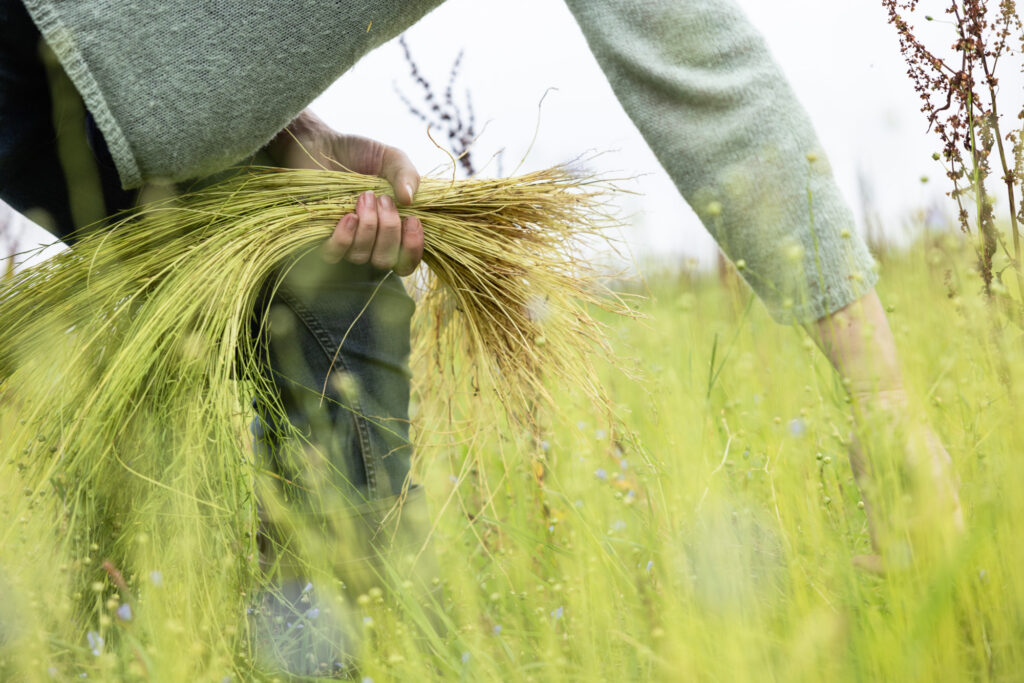
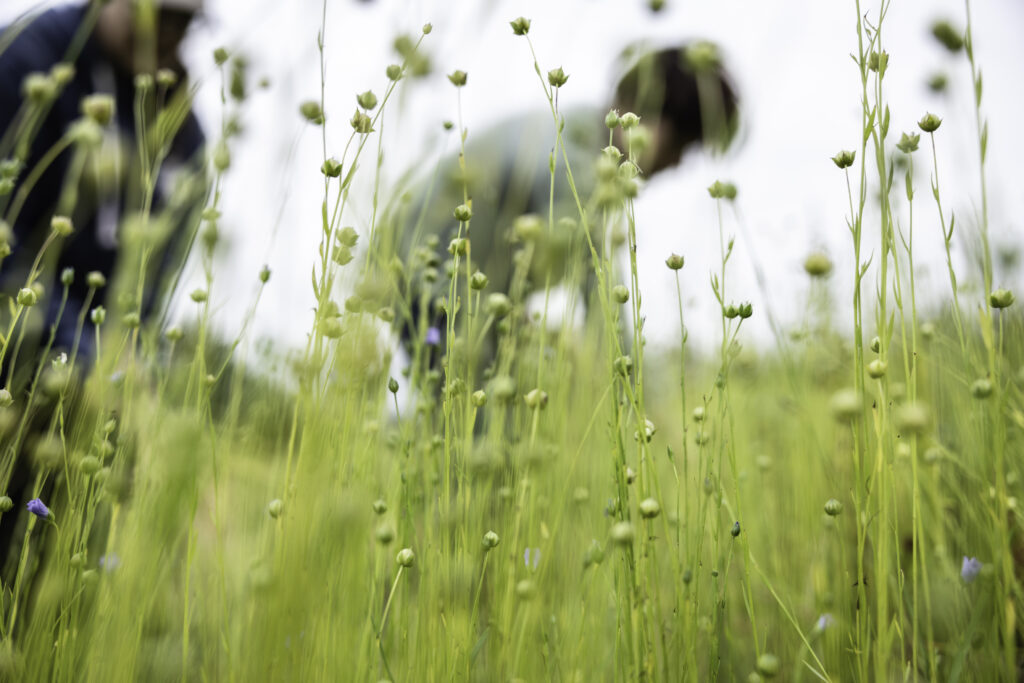
Behind every piece of Irish linen is a single, delicate plant: flax. Known affectionately as the “wee blue blossom” for its pale blue flowers, flax is one of humanity’s oldest crops, and the starting point for the whole history of Irish linen.
From plant to cloth
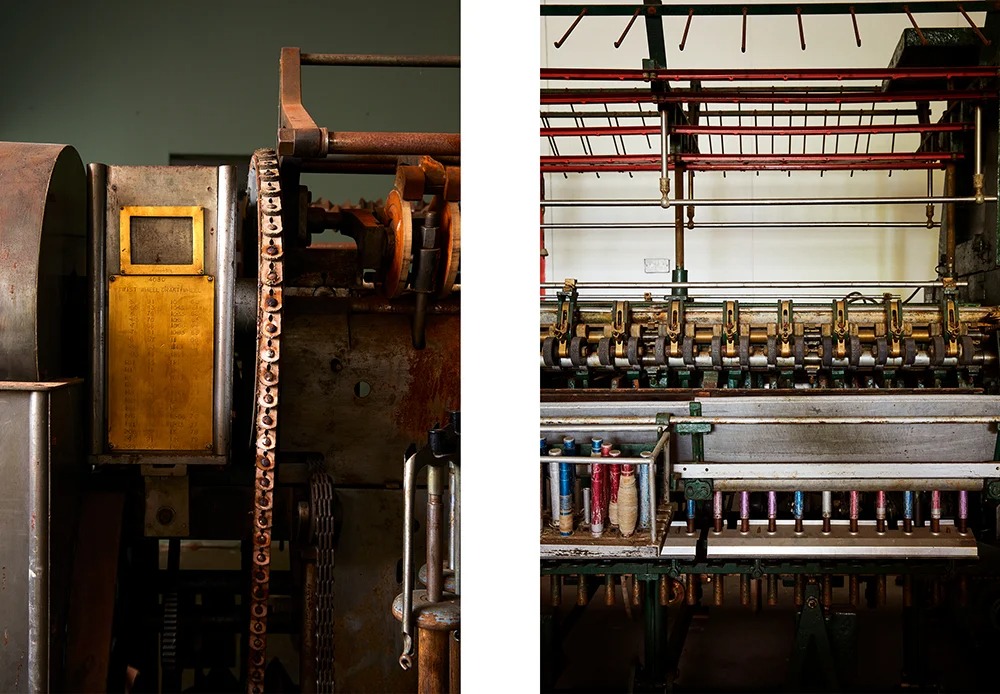
Linen is spun from the fibres hidden inside the stem of the flax plant. Turning one into the other is slow, skilled work: the flax is pulled from the ground (not cut), then “retted”, soaked so the woody stem rots away from the fibre, then dried, broken, scutched, heckled (combed) and finally spun into thread and woven into cloth. It is one of the most labour-intensive fabrics in the world, which is part of why linen has always been prized.
One of the world’s oldest fabrics
In a cave called Dzudzuana, in the hills of the Caucasus, archaeologists sifting through Ice Age sediment found wild flax fibres, spun and twisted into thread, more than 30,000 years old. Some had even been dyed; traces of turquoise, pink, grey and black, by people who shared their world with mammoths and sabre-toothed cats. These are the oldest known textile fibres on Earth. Long before the wheel, before writing, before farming itself, someone sat in the mouth of that cave and twisted flax into string.
From there the thread runs unbroken through human history. The first farmers of the Near East were weaving flax into cloth 9,000 years ago; the ancient Egyptians raised it to an art, wrapping their pharaohs in linen so fine and strong it has survived in Tutankhamun’s tomb for over three millennia. You can see a piece when you visit the wonderful Irish Linen Centre in Lisburn.
Flax in early Ireland
Flax was being cultivated in Ireland by the 11th century, and from then until the 17th century linen was woven here on narrow looms into a cloth known as “bandle linen.” Linen was woven into Irish identity in the most literal sense: the Irish wore the léine, a long tunic often dyed saffron yellow as a sign of rank. It was so distinctive that Henry VIII passed laws in the 1530s to restrict both its colour and the amount of cloth used.
Why flax still matters
Flax is enjoying a quiet revival today. It grows without much irrigation, uses far fewer chemicals than cotton, and every part of the plant can be used — making linen one of the most sustainable fabrics available. The plant that built Ireland’s greatest industry is, it turns out, perfectly suited to a more environmentally conscious age.