How a heritage project became a sustainability project that takes its heritage seriously
When people first hear about Linen Workers CIC, they tend to file it under “heritage” — old machines, old skills, a nod to the past. That’s part of it. But the deeper we’ve gone, the clearer it has become that reviving flax and linen in Northern Ireland is not a museum exercise. It’s one of the most practical environmental things a farm and a community can do together.
As Rebecca Burgess of Fibreshed puts it, this “is not a heritage project that gestures towards sustainability. It is a sustainability project that takes its heritage seriously.” Here’s what that means, stage by stage.
The most nature-friendly crop in the field
Flax, grown at the right scale, asks very little of the land. No fertiliser needed, no pesticide. Set that against other textiles that need huge amounts of water for processing or which shed micro-plastics and flax starts to look less like a relic and more like an answer.
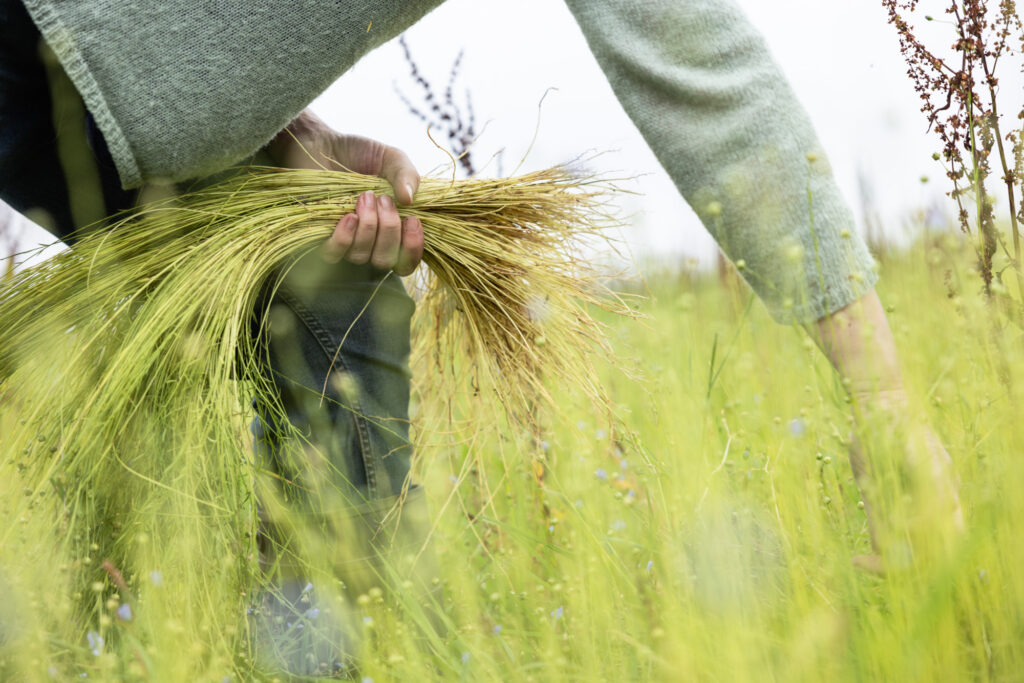
Grown as part of a proper rotation, flax supports soil health rather than exhausting it. It’s blue flower is a useful nectar source for pollinators. At Mallon Farm bees, hoverflies and butterflies swarm over the crop which brings swallows to swoop low over the blue flowers doing circuits. Bird’s foot trefoil and clover naturally follow the crop so when it is harvested there is no bare soil and those clever plants are already drawing nitrogen out of the air to fix in the soil.
This is “a practical demonstration of how traditional crops can contribute to the biodiversity, low-input and low-carbon outcomes that farming policy increasingly needs to deliver.”
Martin Lines, Nature Friendly Farming Network
River friendly retting
Retting, steeping the flax so its fibre releases from the stem, is where the old industry did real environmental damage. The nutrient-rich retting water was let straight into the rivers, and there’s a direct, documented link between the rise of linen and the decline of water quality in Ireland’s rivers. Some say it’s the very reason flax stopped being grown here at all.
At Mallon Farm, Helen and Charlie deal with the problem in a very simple way. They ret with harvested rainwater, keep it contained, and return the spent water to the land as fertiliser. Following the same protocols as would be used for slurry – spread it when the weather is right and never within 10m of a waterway. They would need to spread 60 times as much retting water as they do to overload their land with nutrients. It works when the nutrients are kept on the farm and the scale fits the land.
Renewable power where it matters most
A 2020 life-cycle analysis of linen found that spinning, usually done abroad, on fossil-fuel power, is the single biggest source of carbon in the whole process. That’s exactly the stage we hope to bring home.
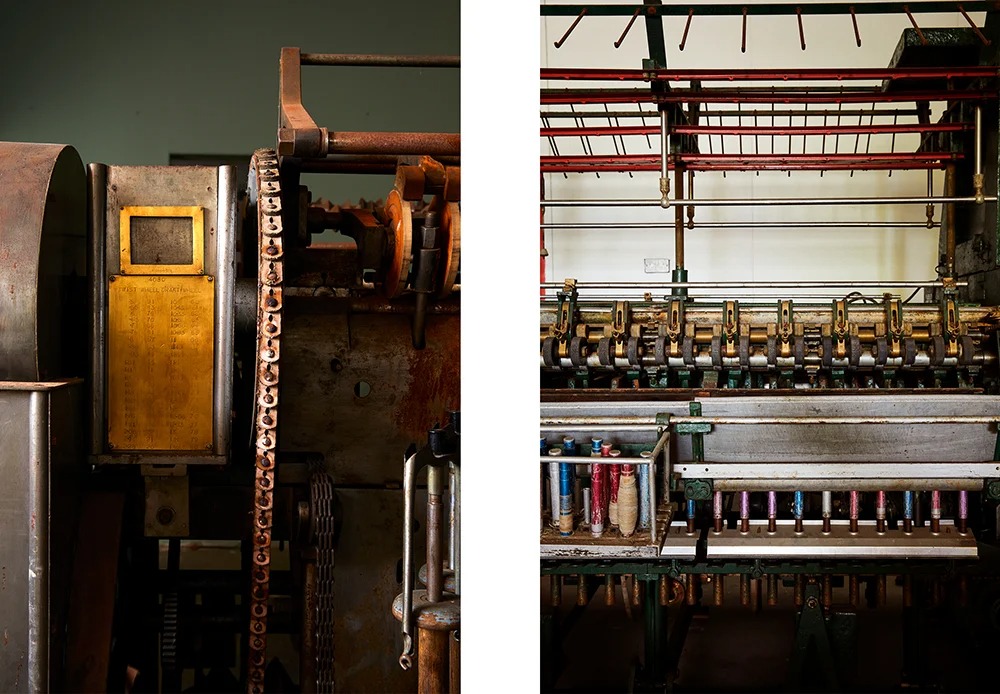
The spinning mill we hope to restore at Hillmount would run on power from the site’s own water turbines: renewable energy, no carbon from generation. Linen produced within a fifty-mile radius, spun on water power, using homegrown fibre, the result, could be climate-beneficial, carbon-negative. That’s the ambition we’re working towards.
Restoration over replacement
Our approach is to restore machines rather than buy new ones. Every part would be machined to fit what already exists; the oils, fixings and coatings chosen for compatibility with original components; the skills we want to teach are the skills of maintenance and care, not disposal and replacement. Charlie has already shown what this looks like, restoring the farm’s 1940s scutching turbine over four years — the wider programme would build on that.
Repairing what we already have is simply the lowest-carbon way to do industrial heritage. It conserves all the embodied carbon that new machinery would cost — and it makes a point worth making in a throwaway age.

Put it all together and the picture we’re working towards comes into focus: a low-input crop, feeding pollinators, grown in rotation, retted without harming the river, processed locally, spun on renewable power, on restored machines. Some of that is already happening; much of it depends on the funding and support we’re now seeking. But it shows why, for us, heritage and sustainability were never competing priorities. Done properly, they’re the same project.
Flax is already growing again at Mallon Farm. If you’d like to be part of what comes next, get in touch
The Linen Workers Restoration Project is subject to funding. This post describes what we hope to do, not a confirmed programme.