Funding applied for: We have submitted a National Lottery Heritage Fund application and are aiming to begin our restoration project this summer.
Northern Ireland · Heritage · Community
Growing linen here again
We are preparing to restore flax-processing machinery, revive endangered craft skills, and reconnect people with Northern Ireland’s extraordinary linen heritage, not as a museum, but as a living, working tradition. Restoration begins this summer, subject to funding.
Scroll
Who we are
The homegrown supply chain. We’re rebuilding it – together.
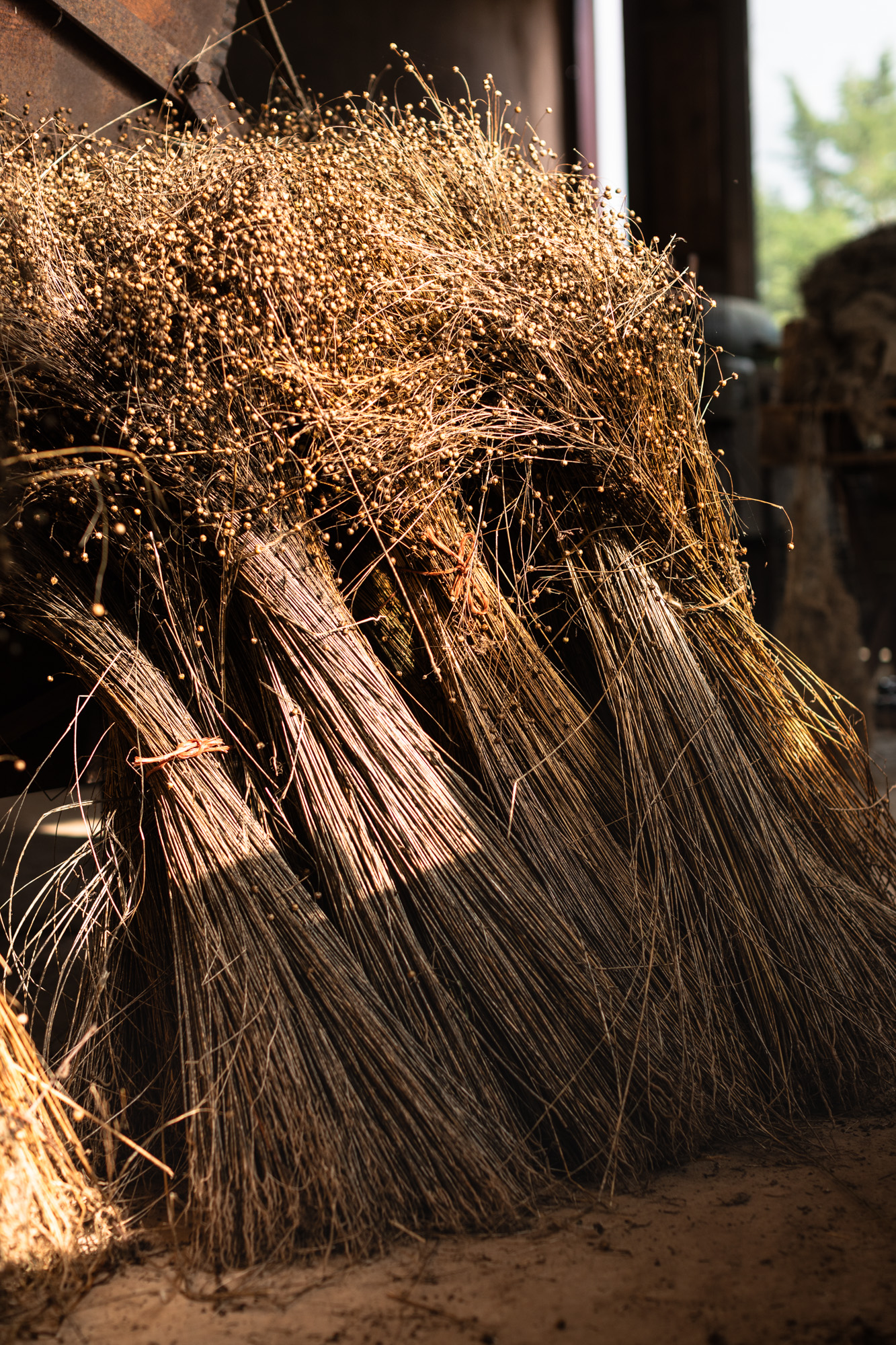
Northern Ireland once grew more than 300,000 acres of flax for making linen. By the 1960s that local flax growing had virtually disappeared, the machinery fell silent, the skills dispersed, and the homegrown supply chain was broken.
Linen Workers CIC is a Northern Ireland Community Interest Company set up to conserve, interpret and revive the heritage of the island’s flax growing and processing industry, not as a museum, but as a living, working tradition.
We have applied to the National Lottery Heritage Fund and are planning to begin our restoration project this summer. The proposed programme will restore flax-processing machinery across two sites, train volunteers in conservation and engineering skills, and build toward a full supply chain, from field to fabric.
Before industrialisation, linen production was a collaboration between farmers, scutchers, spinners, weavers, finishers and beetlers. In that spirit, Linen Workers is a collaboration between partners who are all passionate about locally produced textiles; Helen Keys and Charlie Mallon of Mallon Linen, Mario Sierra of Mourne Textiles, Meadhbh McIlgorm of the Linen Biennale, Malú Colorín of Fibreshed Ireland and Will Frazer of Hillmount Properties Ltd.
We are delighted to have received letters of support for the project from all over the UK and Ireland and further afield including the Heritage Crafts Association, Kindred of Ireland, the Ulster Folk Museum, Sir Tim Smit, Mid Ulster Council and the Ulster Guild of Spinners Weavers and Dyers.
“Linen is in our DNA, every family has a connection somewhere. It is in our family names, our place names, our architecture and our industrial heritage.”— Linen Workers CIC
Our approach
From field
to fabric
The homegrown flax-to-linen supply chain here on this island, can be rebuilt. We are working toward it one machine, one skill at a time.
It’s small scale to start, very local, built through collaboration. This means we can ensure it works sustainably at all stages. As the model gets proven it can be replicated, scaling out rather than up. We will share what we learn in the hope that more small scale processing develops across the island.
01
Grow
Flax grown at Mallon Farm, Cookstown, reviving an agricultural heritage dormant since the 1960s. More and more growers and groups are starting to grow across the island. We will work to support this developing digital and printed guides to share our experience.
02
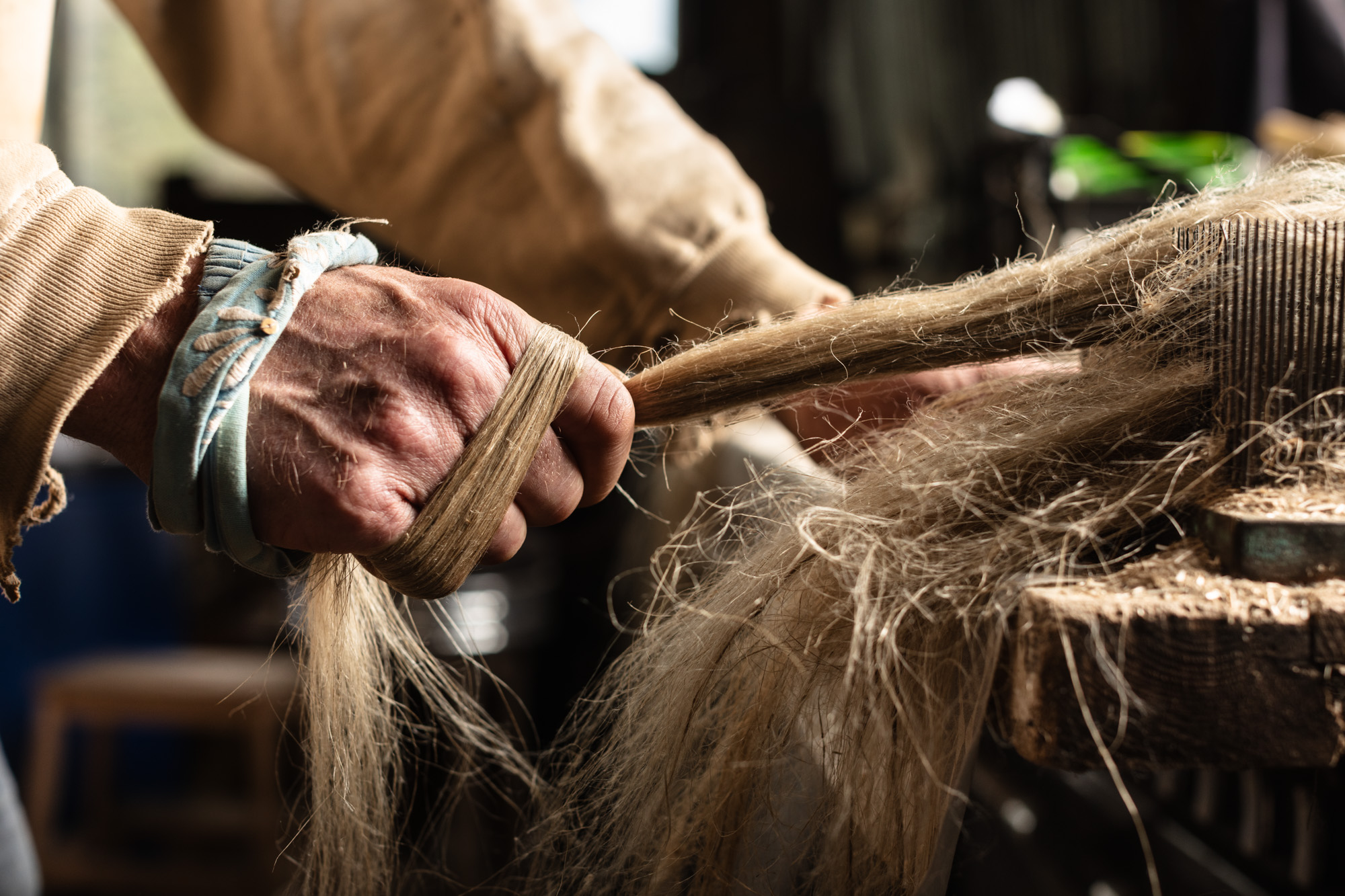
Scutch & Heckle
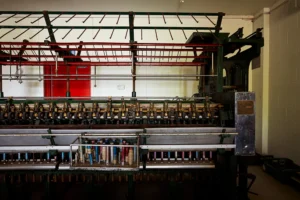
Restored heritage machinery processes the raw fibre, including a 1940s Mackie’s scutching turbine. Other growers can bring their flax for scutching at Mallon Farm or for small scale projects can build their own flax processing equipment, we will provide guides on how to do this. Through the project we will make the mill more accessible so more visitors can see this amazing process.
03
Spin
From 2027, we plan to operate the Hillmount spinning line, using machinery owned by our partners Mourne Textiles, we will offer spinning as a service for other growers. The mill will be open on operating days so visitors can see the process.
04
Weave & Share
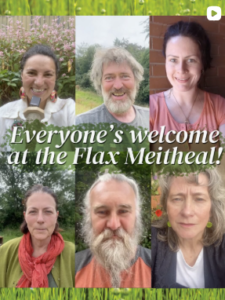
We will share what we know and support others to get into growing and processing. Our hope is to see flax growing again across the island. We plan to develop tours, workshops, online courses and host open days – and of course we will be involved in the Flax Meitheal in August.
Our environmental commitment
Fully regenerative, river to root
The historic linen industry was hard on rivers. Retting water, rich in bacteria and nutrients was discharged directly into watercourses, and did terrible damage. We are doing things differently. Every stage of our process is designed to protect the environment, not exploit it..
River-friendly retting
We use only harvested rainwater for retting, no mains supply, no river extraction. Retting takes place in contained tanks, and the spent water, nutrient-rich from the natural bacterial process, is returned directly to the fields as a liquid fertiliser. Nothing enters the watercourse. The loop is closed. The scale works, we grow in a rotation so will never have more retting water than the lands needs. We’d have to spread 60 times as much retting liquid for the ground to become overloaded.
Renewable energy spinning
The Life Cycle Analysis1 of linen production identifies spinning as the main source of carbon emissions.. Our spinning mill will be powered by the site’s own water turbines, which have supplied renewable energy to the surrounding village for over a century. Locally grown fibre, spun on renewable power, within 50 miles of the field.
Flax is one of the lowest-input crops a farmer can grow, we use no pesticides, no fertiliser, and we can see the biodiversity benefits. In summer we the field is alive with insects and flocks of linnets appear.
Get involved
Come and get your
hands dirty
Subject to funding, we are planning weekly restoration sessions across both Mallon Farm and Hillmount from this summer. Dip in as you please, no commitment, no experience needed. Work alongside engineers and craftspeople, learn heritage restoration skills, and be part of something genuinely historic.
Join the restoration programme
Weekly sessions at Mallon Farm, Cookstown and Hillmount, Cullybackey. All welcome, no engineering experience necessary.
Stay in the loop
Sign up to our mailing list for restoration updates, open day announcements and news from the field.
© 2026 Linen Workers CIC · Registered in Northern Ireland · Company No. NI733178