| Few industries are woven as deeply into Ireland’s story as linen. For three centuries it clothed the country, built Belfast, and carried the name “Irish linen” around the world as a byword for quality. This is a very short history of Irish linen, how a humble blue-flowered crop called flax rose to global fame, and why it very nearly vanished. |
It begins with a plant — flax
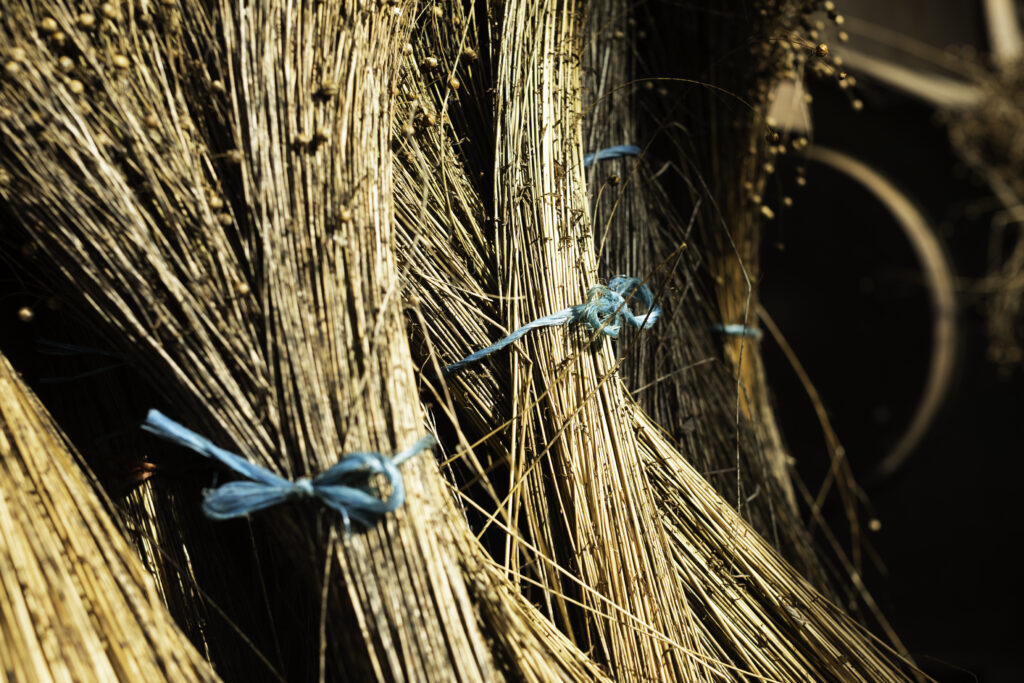
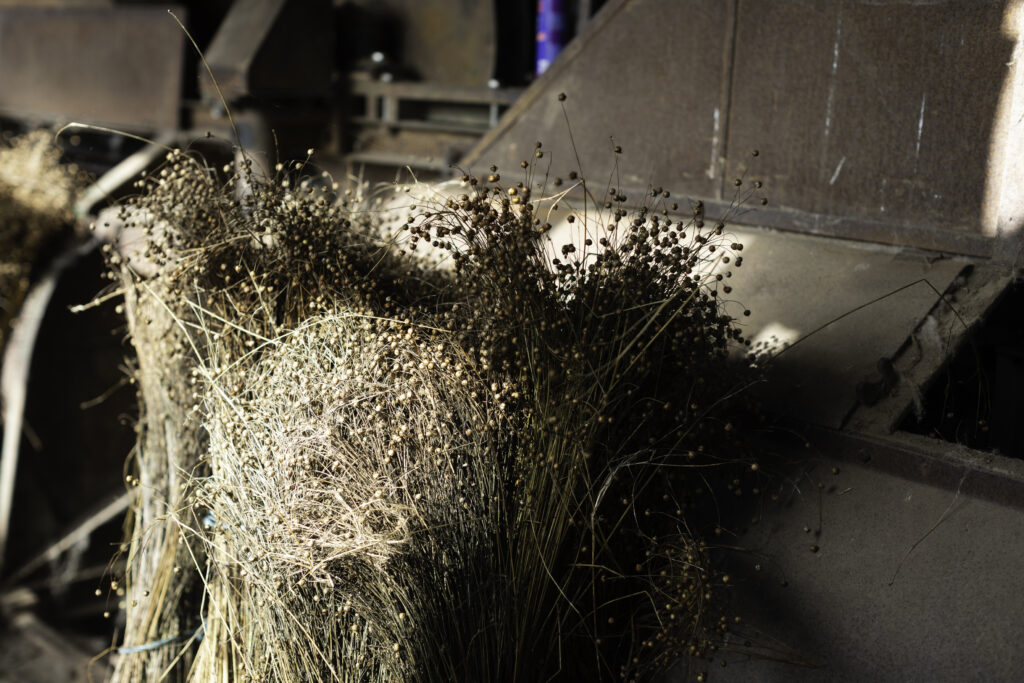
Linen is made from flax, one of the oldest cultivated plants in the world. Flax was grown in Ireland as far back as the 11th century, long before linen was an industry, and Irish households spun and wove it by hand for generations. The cloth even shaped Irish dress: the saffron-yellow léine, a long tunic, was worn as a mark of status. Read more about flax, the plant behind the cloth →
A ban that changed everything
The modern industry was born of politics. In 1699 a new law banned the export of Irish woollen goods almost everywhere, and the Crown’s stated policy was blunt: discourage Irish wool, and encourage Irish linen in its place. Skilled refugees arrived to build it, English Quakers in the Lagan Valley, and Huguenots led by Louis Crommelin, who settled at Lisburn.
The state grows an industry
From 1711 a government body, the Linen Board, poured money into the trade, importing flax seed and rewarding farmers who grew the crop. By 1780, exported linen was worth more than Ireland’s cattle, meat, dairy and grain combined. The most famous scheme came in 1796, when around 55,000 growers were given free spinning wheels and looms for planting flax.
Linenopolis: Belfast rules the world
In the 19th century the industry moved from the cottage to the factory. Water-powered and then steam-powered mills transformed production, and Belfast grew so dominant it earned the nickname “Linenopolis.” The breakthrough was wet spinning, introduced around 1824, which allowed fine flax yarn to be spun by machine. Prior to that date the machinery was more suited to cotton. By the 1870s it was the largest linen-producing city on earth, with hundreds of thousands of spinning spindles turning.
The rise and fall
Here lies the great irony. Irish flax growing peaked in 1864 at around 301,000 acres, but the manufacturing industry peaked half a century later, around 1913-1921. By then, Belfast ruled the linen world while importing 85% of its flax from abroad. The local crop that created the industry had been abandoned by it. Rural communities who had previously been employed on farms and in fields, at wheels and looms in their own homes found themselves having to move to Belfast for jobs in factories, often in poor conditions.
Yet Irish linen never truly died. It did what it had done before, it reinvented itself. Rather than compete on price, it moved upmarket, trading on quality, craft and heritage to become a premium, sustainable fabric sought after in fashion and fine living around the world. The name “Irish linen” still carries that reputation today.
The wheel kept turning, but the wee blue blossom had vanished from the fields. Keeping that story, and that heritage, alive is why Linen Workers CIC exists.